
Applause for Mackerel
How Tribal Identity Replaced Thought and Citizenship

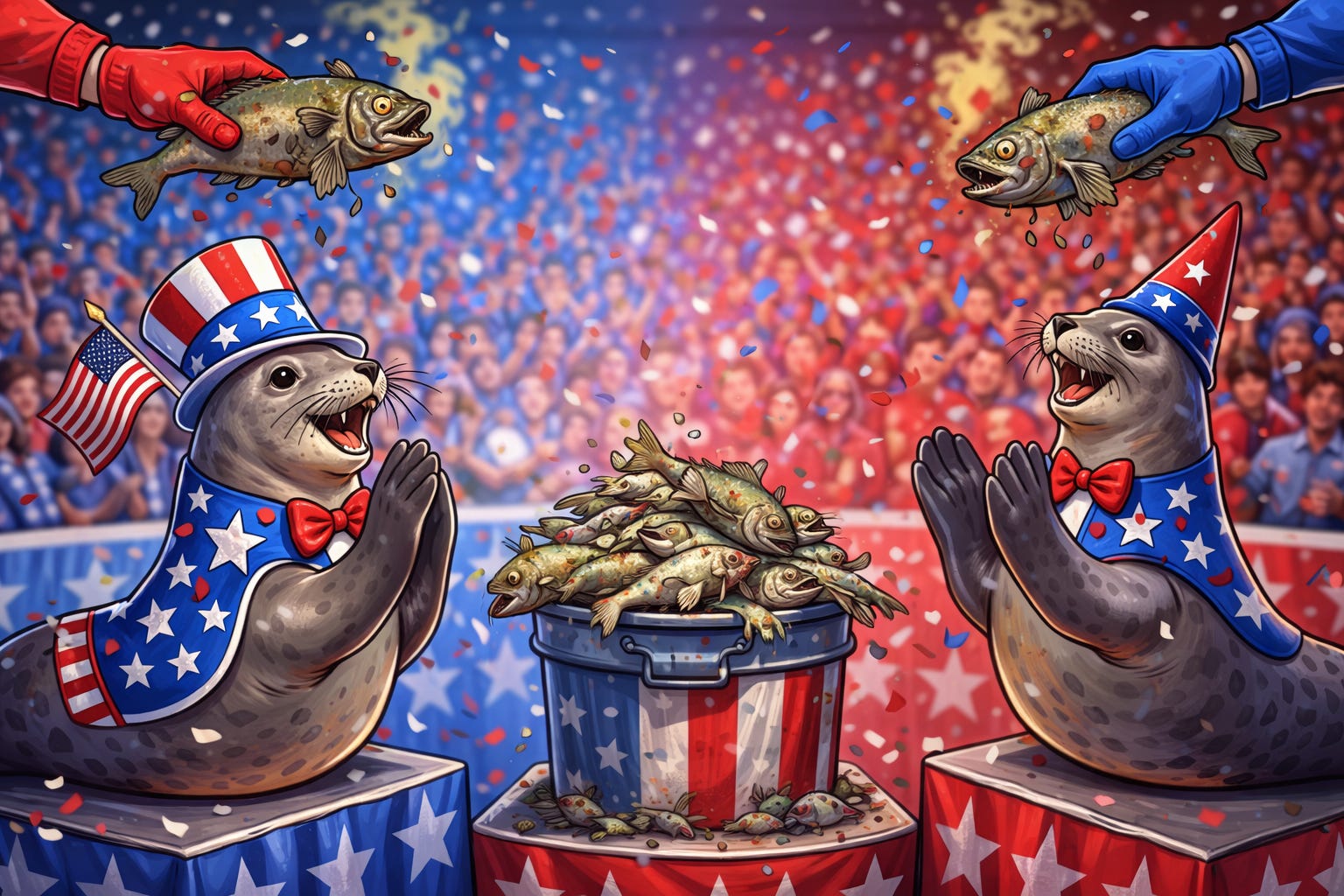
Modern politics did not quietly lose its way; it was cheerfully converted into entertainment. What once demanded judgment, trade-offs, and a tolerable acquaintance with reality has been repackaged as a contest between memes, slogans, and mascots. Victory is celebrated even when nothing improves, defeat is treated as existential humiliation, and loyalty is prized above competence or truth. In this climate, citizens are no longer asked to think or govern themselves, only to root, boo, and feel personally affirmed by outcomes they neither shaped nor understand. Politics, stripped of consequence and swollen with identity, has become less a civic responsibility than a televised sport—complete with teams, rituals, and the comforting illusion that watching counts as participation.
Recently I’ve come to realize that much of my family, and some friends, experience politics exactly this way: not as a civic duty, but as a spectator sport. When your side wins, even if it improves nothing in your actual life, you experience it as a personal victory, as if you earned it rather than merely cheered for it. There’s no policy literacy, no material gain, no accountability—just tribal satisfaction. In the end, it’s not civic engagement at all. It’s performance: a trained seal, clapping on cue, thrilled by the illusion of triumph while being tossed ever more rotten fish.
This statement is blunt, but it isn’t gratuitous. It’s a criticism of behavior, not a personal attack. Calling out tribal, sports-team politics will feel “hurtful” only if it lands uncomfortably close to the truth. Discomfort isn’t cruelty; it’s often the first signal that something worth examining has been touched.
Let me be clear: I’m not approaching these conversations with the vitriolic anger of an overly intoxicated uncle. I’m calling out bad-faith arguments, hypocrisy, and contradictions. That may be uncomfortable, but it isn’t rage—it’s critique.
The truth is that identity has replaced thinking. Positions aren’t being weighed on facts, consequences, or consistency; they’re being adopted because they signal membership. Once politics becomes identity, contradiction stops mattering. Evidence becomes optional. If our side says it, it’s right; if the other side says it, it’s propaganda. At that point, disagreement feels personal because it is—the idea isn’t being challenged, the tribe is. That’s why critique is heard as cruelty and questions as betrayal. The reaction isn’t about tone; it’s about protecting an identity that can’t survive scrutiny.
And that’s exactly the move Trump has perfected. Lines like
“They’re not coming after me, they’re coming after you”
are designed to fuse identity to power. Criticism of him is reframed as an attack on you. Accountability becomes persecution. Facts become insults. Once that switch is flipped, thinking is no longer analytical—it’s defensive. Any challenge feels personal because it’s meant to. That’s how identity politics works at its most effective: not by persuading, but by convincing people that to question the leader is to betray themselves.
In the end, treating politics as a spectator sport is not merely unserious—it is corrosive. It trades responsibility for dopamine, judgment for loyalty, and citizenship for applause. Democracies do not collapse only by force; they rot when enough people decide that feeling victorious matters more than being right, and belonging matters more than consequences. When leaders like Donald Trump succeed in welding personal identity to political power, criticism becomes heresy and facts become insults. The antidote is neither civility theater nor tribal counter-chants, but the unfashionable discipline of thinking: holding ideas loosely, demanding evidence, and remembering that politics is not a game you watch to feel validated, but a system you participate in to be governed well—or badly, if you abdicate that duty.